The Quiet Supercar: How America's Most Serious Lamborghini Owners Learned to Disappear
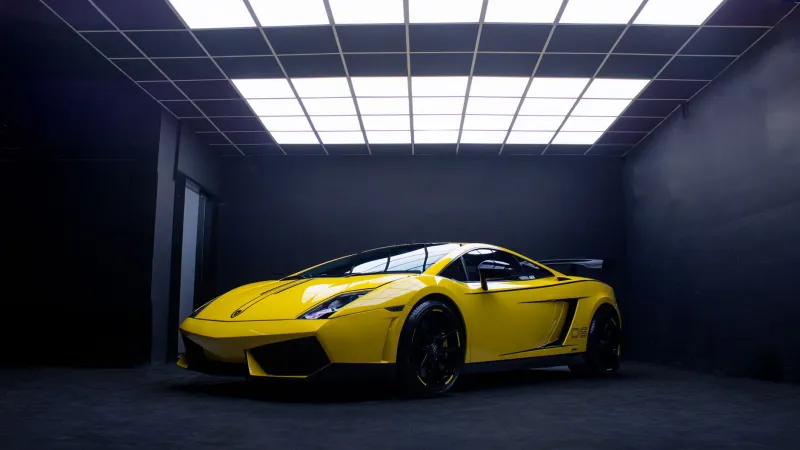
There is a particular irony embedded in the modern Lamborghini story. A marque born from Ferruccio Lamborghini's desire to out-shout Ferrari—to build machines so visually aggressive and sonically violent that they could not be ignored—now finds its most devoted American stewards actively working to keep their cars out of sight. Not out of shame. Not out of indifference. But out of a considered, almost philosophical conviction that genuine exclusivity has nothing to do with an audience.
This is the American garage paradox: the louder the car, the quieter its owner has chosen to become.
The Shift No One Announced
The transformation did not arrive with a press release. It accumulated quietly, visible only in patterns—fewer exotic cars at weekend cruise-ins in Scottsdale, a notable absence of Huracáns in the valet lines of certain Miami hotels, a marked reluctance among a specific tier of collector to post anything at all. Ask around within serious enthusiast communities, and the explanation tends to be delivered with a certain measured calm.
"I spent about two years posting everything," said one Texas-based owner of multiple Lamborghinis, speaking on condition of anonymity—itself something of a statement. "Then I realized I was driving for the content, not for the car. The moment I stopped, I actually started enjoying what I owned."
This sentiment, once considered eccentric, has become something approaching conventional wisdom among a segment of American Lamborghini ownership that skews toward the established rather than the aspirational. These are not first-time supercar buyers seeking peer validation. They are individuals for whom the purchase itself was unremarkable and for whom the performance of ownership has grown tedious.
What Is Actually Driving the Retreat
The motivations are layered and not always romantic. Theft statistics have played a meaningful role. High-profile supercar thefts have increased substantially across major American metropolitan areas, and social media has functioned, in several documented cases, as an inadvertent GPS system for opportunists. A Lamborghini photographed outside a specific restaurant, tagged with a location, driven by a recognizable face, becomes an advertisement directed at precisely the wrong audience.
Insurance underwriters have taken notice. Several specialty insurers that cater to collector vehicles now conduct social media assessments as part of their risk evaluation process, a development that has not gone unnoticed by policyholders. The calculus is straightforward: visibility is liability.
Beyond security concerns, there is the subtler erosion of experience that accompanies public ownership. A Lamborghini driven through a crowded urban corridor becomes a performance piece rather than a driving instrument. Every stoplight becomes a stage. Every pedestrian with a smartphone becomes a potential audience member. For owners who purchased their vehicles with the intention of engaging with the engineering rather than the spectacle, this dynamic is fundamentally at odds with the point.
The Rise of the Private Driving Culture
What has emerged in place of the public-facing ownership experience is a network of deliberately low-profile alternatives. Private track days, organized through word-of-mouth and accessible only through established connections, have grown substantially in popularity among serious collectors. Venues across the country—from the hill country of central Texas to private facilities in the Carolinas—now host invitation-only events where Lamborghinis run without cameras, without spectators, and without any obligation to perform for anyone other than their drivers.
Collector circles have followed a similar trajectory. Groups that once maintained active social media presences have gone dark or migrated to encrypted communication platforms, sharing information about service providers, parts availability, and event logistics entirely outside the public sphere. Membership is earned, not purchased, and the primary qualification is a demonstrated lack of interest in broadcasting the fact of one's participation.
This culture has its own aesthetic logic. The most respected members of these communities tend to drive the most understated configurations—darker colors, minimal exterior modification, factory specifications preserved with obsessive care. The Lamborghini that draws no second glance from a passing motorist has achieved something the matte-wrapped, wide-bodied example outside the nightclub never could: it belongs entirely to its owner.
Restraint as the Ultimate Flex
There is a philosophical dimension here that deserves direct examination. American consumer culture has long operated on the assumption that the purpose of a luxury object is to signal its ownership—that the value of a Lamborghini is at least partially social, derived from the reactions it produces in others. This assumption is being quietly but firmly rejected by a cohort of owners who have the resources to indulge it and have simply chosen otherwise.
The argument, articulated with varying degrees of self-awareness by those who hold it, runs roughly as follows: if the car is extraordinary, it requires no amplification. If your ownership of it needs constant external confirmation, the car has become a prop rather than a possession. True appreciation is private. True power does not require a witness.
This is not an entirely new idea—old-money American culture has long practiced a version of it—but its application to a vehicle category previously defined by theatrical excess represents a genuine evolution in how a certain class of enthusiast relates to the objects they collect.
What This Means for the Broader Culture
The implications extend beyond individual preference. Dealerships in major markets have noted a shift in buyer behavior, with a growing number of transactions completed with minimal public fanfare and a specific request that the purchase not be featured in the dealer's own marketing content. Allocation conversations that once centered on color visibility and exterior drama now increasingly involve questions about subtlety and restraint.
Lamborghini itself, for its part, has responded to adjacent pressures with expanded personalization programs that allow for configurations far removed from the brand's traditional visual vocabulary. A Lamborghini finished in a muted earth tone, with a restrained interior and no exterior badging beyond what the factory mandates, is no longer a curiosity. It is, in certain circles, the most desirable specification available.
The irony is complete and, in its own way, elegant. The car that was designed to be impossible to ignore is being most deeply appreciated by the people most determined to ignore the world's opinion of them. In stepping away from the performance of ownership, they have arrived at something that looks, from the outside, like pure confidence.
Forruccio Lamborghini built his cars to make a statement. The statement his most sophisticated American owners are now making is one of deliberate, considered silence—and it may be the loudest thing about them.