Shadows in the Garage: The Hidden World of European-Spec Lamborghinis That Quietly Crossed the Atlantic
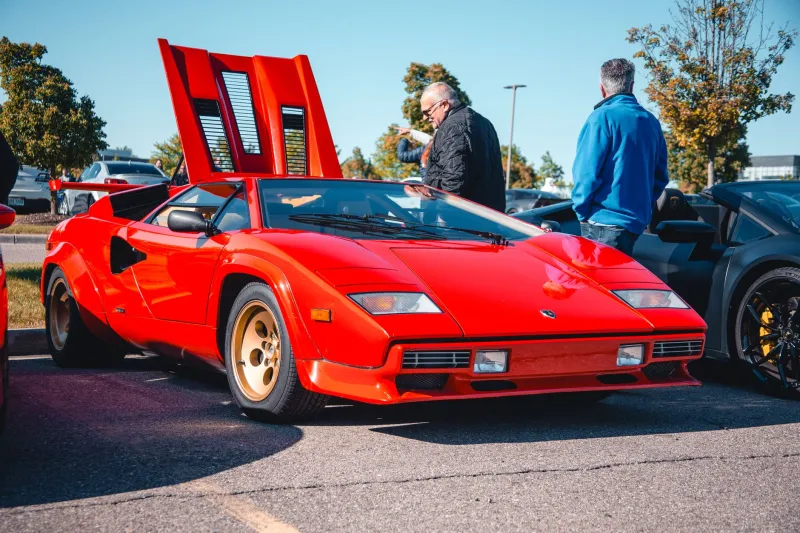
The most coveted Lamborghinis in America are not always the ones that arrived through official channels. Some of the most remarkable examples in private hands—vehicles whose specifications, mileage figures, and factory configurations would make any serious collector's pulse quicken—entered the country through paths that were rarely straightforward and are sometimes difficult to fully document. These are the gray-market unicorns: European-specification cars that found their way into American collections through inheritance arrangements, private estate sales, diplomatic transfers, and the occasional transaction that defies easy categorization.
Understanding this corner of the exotic car market requires equal parts automotive knowledge, legal literacy, and a tolerance for ambiguity that not every buyer possesses. For those who navigate it successfully, the rewards can be extraordinary. For those who do not, the consequences range from costly to genuinely catastrophic.
The Anatomy of a Gray-Market Import
The term "gray market" carries connotations of illegality that are not always accurate but are rarely entirely absent. In the context of European-specification Lamborghinis entering the United States, the phrase describes vehicles that were manufactured and originally sold outside the American regulatory framework—meaning they were not built to comply with Federal Motor Vehicle Safety Standards or Environmental Protection Agency emissions requirements at the time of their original production.
During the 1980s and into the early 1990s, a cottage industry of independent importers—sometimes called "registered importers" or simply RIs—operated legally within a specific regulatory window that permitted the conversion of foreign-specification vehicles to American standards. The most active period for this trade coincided precisely with some of Lamborghini's most iconic production runs: the Countach LP400S, the LP500S, and the 25th Anniversary edition were all imported and converted by these specialists in meaningful numbers.
The conversions were not trivial undertakings. Bumper systems had to be modified to meet American impact standards. Lighting assemblies were replaced with DOT-compliant units. Catalytic converters were added to vehicles that had left Sant'Agata without them. The quality of these conversions varied considerably, and that variance has become one of the defining complications in authenticating gray-market cars today.
What Makes These Cars Desirable
The appeal of a European-specification Lamborghini is not difficult to understand once one appreciates what the American market received—and, more pointedly, what it did not. European-market cars frequently carried engine specifications that were detuned or modified for American emissions compliance. The original Countach LP400, to cite the most celebrated example, produced meaningfully more power in its European configuration than in the form that arrived at American dealerships after regulatory modification.
Beyond raw performance figures, European-specification cars often retain factory details that were altered or eliminated during the conversion process. Original instrument clusters calibrated in kilometers per hour. Factory lighting assemblies that differ aesthetically from their American replacements. In some cases, interior specifications or color combinations that were never offered through official American channels. For the collector who prizes absolute originality, these distinctions are not cosmetic—they represent the difference between a car that left the factory precisely as Lamborghini intended and one that was subsequently modified to satisfy regulatory requirements that the factory itself did not design for.
Low-mileage examples amplify this appeal considerably. A European-specification Countach with fewer than 1,000 kilometers—a figure that is implausible but not impossible given the documented history of certain long-term private holdings in Italy and Germany—represents a form of automotive time capsule that the conventional collector market simply cannot replicate.
The Legal Landscape, Plainly Stated
Any serious discussion of gray-market Lamborghinis must engage honestly with the legal framework governing their ownership and transfer. The current regulatory environment is considerably less permissive than the one that enabled the RI trade of the 1980s. Vehicles less than 25 years old that were not originally manufactured to American specifications face significant barriers to legal importation, including the requirement that they be modified to full compliance standards by an NHTSA-registered importer—a process that is expensive, time-consuming, and not always technically feasible for low-volume exotic cars.
Vehicles that have crossed the 25-year threshold, however, qualify for exemption from Federal Motor Vehicle Safety Standard compliance requirements under the Show and Display provision and related statutes, provided they meet specific criteria regarding historical significance or technical uniqueness. This exemption has created a meaningful legal pathway for older European-specification Lamborghinis, and it explains why the market for pre-1999 models has seen sustained collector interest that tracks closely with the rolling 25-year window.
Ownership of a gray-market vehicle that entered the country outside these frameworks does not automatically constitute criminal conduct on the current owner's part, particularly in cases of inheritance or estate transfer where the original importation occurred decades prior. However, the ability to register, insure, and legally operate such a vehicle—and, critically, to sell it with clear title—depends entirely on the documentation available and the regulatory history of the specific car. Prospective buyers are strongly advised to retain counsel with specific expertise in vehicle importation law before completing any transaction involving a European-specification car of uncertain regulatory history.
Authentication in a Market Without Guarantees
The authentication challenges presented by gray-market Lamborghinis are formidable, and they have not gone unnoticed by the broader collector community. The same qualities that make these cars desirable—their rarity, their unofficial provenance, their tendency to exist at the margins of documented history—also make them vulnerable to misrepresentation.
The most reliable authentication pathway runs through the Lamborghini factory archives, which maintain production records for vehicles built at Sant'Agata. A factory certificate of authenticity, issued by the marque's heritage department, can confirm original specification, production date, and initial market destination. This documentation is the gold standard, and its absence should be treated as a significant concern rather than a minor inconvenience.
Independent specialists with deep Lamborghini expertise—a small but genuinely knowledgeable community in the United States—can supplement factory documentation with physical inspection, VIN decoding, and comparative analysis against known examples of the same model and production period. The cost of a thorough pre-purchase inspection is trivial relative to the transaction values involved. It is, without qualification, non-optional.
The Six-Figure Premium and Its Logic
For cars that can be fully authenticated and legally operated, the premiums commanded in the American private collector market reflect a straightforward supply-and-demand reality. There are simply very few European-specification Lamborghinis from the most desirable production periods that exist in genuinely original, low-mileage condition anywhere in the world. The subset of those that have found their way to the United States is smaller still.
When such a car comes to market through a reputable intermediary—whether a specialist dealer, a major auction house, or a well-documented private sale—the bidding reflects not just the vehicle's intrinsic qualities but the extraordinary difficulty of finding another one. Premiums of $100,000 to $300,000 above comparable American-specification examples are not unusual for fully documented, low-kilometer European cars in the most sought-after configurations.
The collector who understands this market and approaches it with appropriate diligence has access to some of the most extraordinary Lamborghinis in existence. The collector who approaches it carelessly has access to some of the most expensive mistakes in the exotic car world. The distinction between those two outcomes lies almost entirely in preparation, patience, and the willingness to walk away from any car whose story does not hold together under scrutiny.
Somewhere in that climate-controlled garage, the Countach continues its vigil. Its story is complicated. Its value is undeniable. And for the collector with the knowledge to pursue it correctly, it represents exactly the kind of hidden treasure that makes this particular corner of the Lamborghini world so quietly, persistently compelling.