From Driveway to Apex: The Real Price of Taking Your Lamborghini to the Track
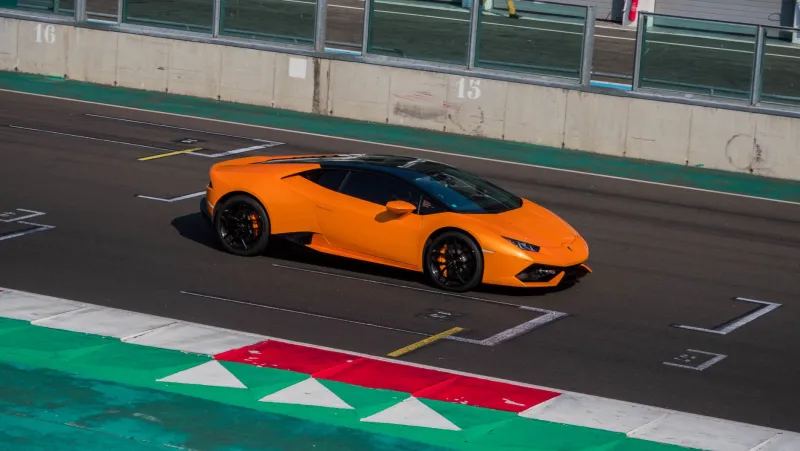
The Lamborghini sits in a climate-controlled garage in Scottsdale, Arizona. Its odometer reads 847 miles. It is three years old. Its owner, a private equity executive who asked to be identified only as Marcus, purchased it as what he describes as "the car I always promised myself." For the first two years, he drove it to dinner, to charity events, and occasionally on a Sunday morning canyon run when traffic permitted. Then, on the recommendation of a business associate, he registered for a track day at Sonoma Raceway. "After the first session," he says, "I understood for the first time what I had actually bought."
Marcus is not alone. Across the United States, a meaningful and growing cohort of Lamborghini owners is making the transition from street-only stewardship to genuine performance driving — taking their Huracáns, Aventadors, and Uruses to professional racing circuits and discovering, often for the first time, the full operational range of machines they have owned for years. It is a trend that is reshaping how American owners relate to their cars, and it comes with a financial and logistical reality that the showroom experience does not fully prepare them for.
The Venues: Where America's Lamborghinis Run
The American motorsport landscape offers a remarkable range of facilities for high-performance driving events, and several have become particular favorites among the Lamborghini ownership community. Road Atlanta, situated in Braselton, Georgia, is frequently cited for its elevation changes and technical character — a track that rewards commitment and punishes hesitation. Laguna Seca, the iconic Monterey County circuit famous for its Corkscrew, draws significant Lamborghini participation during its High Performance Driving Experience weekends, particularly given its proximity to the Northern California wealth corridor.
Thermopolis-adjacent facilities in the Southwest, Virginia International Raceway in Alton, and the Circuit of the Americas in Austin have also emerged as preferred destinations. COTA, in particular, has seen substantial growth in private track day participation, partly due to its Formula 1 infrastructure and partly because Texas's Lamborghini ownership density — the state ranks among the highest in the country — provides a natural audience.
Most of these events are organized either through Lamborghini's own Squadra Corse driving programs, through independent track day operators such as NASA (National Auto Sport Association), or through private clubs that cater specifically to exotic car owners. Entry fees for a single-day event typically range from $1,500 to $4,500, depending on the venue, the level of instruction provided, and the exclusivity of the organization.
The Instruction Layer
For owners arriving at a professional circuit for the first time, the experience gap between street driving and track driving is rarely trivial. Lamborghini's own driver coaching programs pair participants with professional instructors — many with racing backgrounds — who ride in the passenger seat during initial sessions. The goal is not simply to improve lap times but to fundamentally recalibrate how an owner understands their car's dynamic envelope.
"Most of these clients have never experienced true threshold braking," explains one instructor who has worked with Lamborghini's North American driving programs for several years. "They've owned the car for two or three years, and they genuinely believe they know how it drives. The track shows them, very quickly and very honestly, that there is another dimension to the machine entirely."
Private instruction, beyond what is included in standard track day registration, runs between $500 and $1,500 per day depending on the instructor's credentials and the format of the coaching. Several owners interviewed for this article described private instruction as the single most valuable investment in their track day budget — more impactful than any mechanical preparation.
The Insurance Problem
Perhaps the most significant and least-discussed barrier to track participation among Lamborghini owners is insurance — or more precisely, the near-universal absence of it in a track context. Standard exotic car insurance policies, regardless of carrier, almost universally exclude coverage for any vehicle operated on a closed circuit. This is not a matter of premium adjustment; it is a categorical exclusion.
This leaves owners with a choice: accept the financial exposure personally, or seek one of the specialized track day insurance products that have emerged to serve this market. Companies including Lockton Motorsports, American Collectors Insurance, and a handful of Lloyd's of London syndicates offer event-specific coverage for high-value vehicles at track events. Premiums for a single-day policy on a Lamborghini Huracán valued at $280,000 typically fall between $800 and $2,200, depending on the owner's driving history, the specific venue, and the coverage structure selected.
For owners of higher-value models — an Aventador SVJ, for example, or a Sián — the mathematics become more demanding. Several owners described the insurance conversation as the moment at which the full financial reality of track participation came into focus. "I had never thought about what it would actually cost to replace the car out of pocket," Marcus acknowledges. "The track day insurance wasn't expensive, but having to think about it made me realize I was taking this seriously in a way I hadn't before."
Post-Track Maintenance: The Hidden Line Item
The mechanical consequences of genuine track driving are not catastrophic, but they are consistent and cumulative. Lamborghini service centers across the United States report a discernible pattern among clients who participate in track events: accelerated brake wear, elevated tire consumption, and — in cases of repeated high-intensity sessions — thermal stress on transmission and cooling components.
Brake pad and rotor replacement following a full day at a demanding circuit such as Road Atlanta can range from $3,000 to $8,000 depending on the model and whether the car is equipped with carbon ceramic brakes, which require specialized replacement components. Tire wear is similarly variable; an aggressive track day can consume more than half the remaining life of a set of Pirelli P Zero Corsas, which retail at approximately $3,500 to $5,500 per set for most Lamborghini applications.
Scheduled post-track inspections, recommended by Lamborghini's service network and typically priced between $500 and $1,200, have become a standard line item in the budgets of regular track participants. Several owners described establishing dedicated relationships with independent Lamborghini specialists — shops with factory-trained technicians but lower hourly rates than franchised dealers — specifically to manage the increased maintenance cadence that track driving demands.
What Owners Actually Discover
Beyond the financial accounting, the testimony of owners who have made the transition to track driving carries a consistent emotional signature. The word used most frequently, across interviews conducted for this article, is "transformation" — a sense that the car has become something fundamentally different, not mechanically, but experientially.
"I spent two years treating it like a piece of art," says one Huracán EVO owner based in Miami who now attends four to six track events annually. "Now I treat it like an instrument. Both relationships are valid. But the second one is the one the car was actually designed for."
This sentiment aligns precisely with the philosophy that has defined Lamborghini since Ferruccio Bolognese's original confrontation with Enzo Ferrari: that a car built without compromise deserves to be driven without compromise. The growing community of American track enthusiasts who have chosen to accept that challenge — absorbing the costs, navigating the insurance landscape, and returning their cars to service after each event — represents, in a meaningful sense, the purest expression of what the brand has always stood for.
The garage in Scottsdale still holds Marcus's Lamborghini. The odometer now reads 4,200 miles. He has attended seven track days. He is already registered for the next one.