Beyond the Factory Floor: Separating Substance from Style in the Lamborghini Aftermarket World
Owning a Lamborghini in America is, by almost any measure, an extraordinary experience. The factory delivers a machine engineered to extremes — angular bodywork drawn from aerospace inspiration, naturally aspirated or turbocharged powerplants that redefine what internal combustion can feel like, and a driving character so visceral it borders on theatrical. Yet for a certain breed of enthusiast, the factory configuration is merely a starting point.
The US aftermarket ecosystem surrounding Lamborghini has grown remarkably sophisticated over the past decade. From tuning houses in Southern California to bespoke coachbuilders operating out of converted warehouses in Miami and Atlanta, the options available to American Lamborghini owners are staggering in both scope and cost. The challenge lies in distinguishing which investments genuinely transform the driving experience and which simply rearrange the aesthetics without meaningfully altering what happens when the throttle meets the floor.
The Performance Tier: Where Engineering Meets Ambition
For owners of the Huracán — arguably the most widely modified Lamborghini in the American market — the performance aftermarket begins and ends with the engine management system. Companies such as Underground Racing and Heffner Performance have built formidable reputations around forced-induction conversions that can elevate the naturally aspirated 5.2-liter V10 into a genuinely different category of machine. A twin-turbocharged Huracán producing north of 1,000 horsepower is no longer a novelty; it is a documented, repeatable achievement.
However, specialists are quick to temper enthusiasm with practical counsel. "The engine itself can handle the power," explains one Texas-based Lamborghini tuner who has worked on more than sixty Huracáns over seven years. "What most customers don't anticipate is the collateral investment — upgraded fuel systems, reinforced driveshafts, recalibrated transmission software. The engine modification is often the least expensive component of a comprehensive power build."
Exhaust system upgrades occupy a slightly different space in the performance hierarchy. Manufacturers including Akrapovič — the brand's own factory-endorsed partner — along with Capristo and Novitec offer titanium and inconel systems that reduce weight meaningfully while amplifying the acoustic signature of the engine. On a naturally aspirated Huracán or Aventador, a quality exhaust upgrade represents perhaps the most emotionally satisfying dollar-per-impact ratio in the entire aftermarket catalog. The weight reduction is measurable; the sensory transformation is immediate and profound.
Suspension calibration deserves equal attention, particularly for owners who use their vehicles on American roads — which, outside of select metropolitan areas, are rarely as smooth as the Italian highways these cars were engineered to traverse. Adjustable coilover systems from KW Suspension and Öhlins offer genuine tunability, allowing owners to soften the ride compliance for daily use while retaining the ability to stiffen settings for track days. This dual-purpose capability represents authentic, functional value.
Aerodynamic Modifications: Function Follows Form — Sometimes
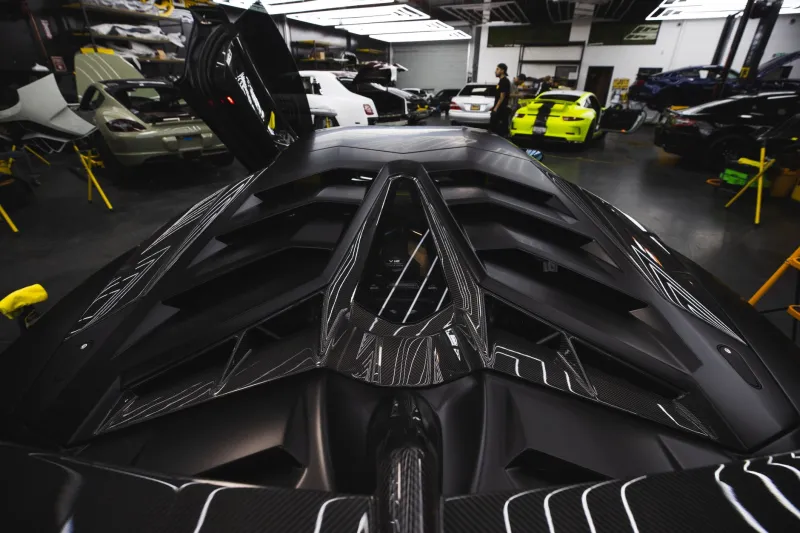
Carbonfiber aerodynamic packages represent one of the most visually dramatic and financially significant categories within the Lamborghini aftermarket. Widebody conversions from companies such as Novitec Torado and Liberty Walk have cultivated devoted followings among American enthusiasts, particularly in markets like Los Angeles and Las Vegas where visual impact carries considerable social currency.
The honest assessment, however, is nuanced. Genuine aerodynamic downforce — the kind that measurably reduces lap times and improves high-speed stability — requires engineering rigor that not every cosmetic body kit supplier applies. A front splitter or rear diffuser that has been validated in a wind tunnel performs a fundamentally different function than one designed primarily for photographic appeal. Discerning buyers would be well served to request documented aerodynamic testing data before committing to a five-figure carbonfiber package.
Conversely, lightweight carbonfiber interior trim, hood replacements, and roof panels from reputable suppliers do deliver measurable mass reduction. On a vehicle where the factory already employs carbonfiber extensively, the marginal gains are modest — but they are real.
The Aesthetic Dimension: Paint, Wrap, and Interior Customization
Lamborghini's own Ad Personam program allows buyers to specify virtually any color combination, interior material, or stitching pattern imaginable at the point of sale. For those who missed that opportunity — or who have since evolved their preferences — the American aftermarket offers compelling alternatives.
Professional paint protection film installation from installers certified by brands such as XPEL or SunTek provides genuine preservation value, particularly in states where road debris and UV intensity are persistent concerns. A full-vehicle PPF installation on an Aventador Ultimae, for instance, represents a defensible financial decision that protects an asset worth well over half a million dollars.
Vehicle wraps, meanwhile, have achieved a level of material quality that would have seemed implausible a decade ago. 3M and Avery Dennison both produce vinyl formulations capable of replicating matte, satin, and even textured finishes with remarkable fidelity. For an owner who desires a color change without committing to a permanent respray — and who wishes to preserve original paint for resale purposes — a professional wrap installation is a strategically sound choice.
Custom interior work, executed by specialists such as Clive Sutton's American partners or independent craftspeople with Lamborghini-specific experience, can genuinely elevate the cabin ambiance of older models. Alcantara headliner replacements, embroidered seatbacks, and bespoke steering wheel re-trimming are modifications that add tactile richness without compromising mechanical integrity.
Making the Calculation: Where Value Actually Lives
The aftermarket landscape rewards informed buyers and punishes impulsive ones. The modifications that consistently deliver authentic value — exhaust systems, suspension calibration, paint protection, and carefully engineered forced-induction packages — share a common characteristic: they were conceived by specialists who understand the engineering underpinnings of these vehicles rather than simply their visual language.
For the American Lamborghini owner navigating this ecosystem, the most productive first step is establishing a relationship with a marque-specialist independent shop — ideally one with documented experience on the specific model in question. The temptation to source parts from anonymous online retailers and install them through generalist performance shops is understandable from a cost perspective, but it introduces risk that is difficult to quantify and potentially expensive to remediate.
The Lamborghini beneath you arrived from Sant'Agata Bolognese as a complete, cohesive expression of Italian engineering philosophy. The most successful aftermarket modifications honor that foundation rather than obscure it.