Wolves in Italian Clothing: The Counterfeit Parts Crisis Threatening American Lamborghini Owners
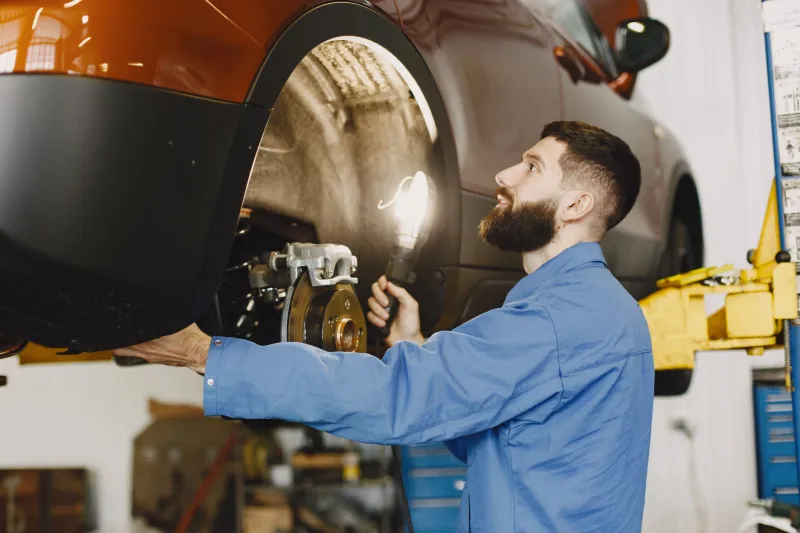
Somewhere in a climate-controlled garage in Scottsdale, Arizona, a Huracán sits freshly restored after a minor collision. Its owner, a successful entrepreneur who requested anonymity, paid what seemed like a reasonable price for replacement carbon fiber components sourced through an online marketplace. The panels fit. The finish looked convincing. The car returned to the road. It was only months later, during a routine inspection at his authorized dealership, that a technician noticed something deeply troubling: the structural properties of those panels bore no resemblance to genuine Lamborghini-certified components. The parts were counterfeit—and had the car been involved in a second impact, the consequences could have been catastrophic.
This scenario is no longer an isolated incident. Across the United States, a thriving parallel economy in fraudulent Lamborghini parts has embedded itself within the ownership community, exploiting the combination of soaring vehicle values, long OEM wait times, and the vast, largely unregulated expanse of online commerce. The problem has grown sophisticated enough to deceive experienced eyes, and its reach extends from casual enthusiasts to seasoned collectors.
The Anatomy of a Counterfeit Market
Understanding the counterfeit parts landscape requires acknowledging just how lucrative it has become. Lamborghinis command extraordinary prices for genuine replacement components. An authentic carbon fiber engine cover for an Aventador, for instance, can exceed several thousand dollars through official channels. A fraudulent equivalent, manufactured overseas at a fraction of the cost and dressed with convincing badging and packaging, can generate enormous margins for criminal enterprises willing to invest in presentation.
According to individuals familiar with the trade—including forensic authenticators who work with insurance companies and private collectors—the counterfeit supply chain typically originates in manufacturing operations across Southeast Asia, though some European sources have also been identified. Products enter the US market through layered distribution networks that deliberately obscure their origins. By the time a carbon fiber splitter or a set of brake calipers reaches an American buyer through a third-party online listing, its fraudulent provenance has been thoroughly laundered behind multiple transactions.
The product categories most heavily targeted mirror the parts that owners most frequently seek outside official channels: exterior body components, interior trim elements, brake system hardware, and increasingly, electronic control modules. The latter category represents a particularly alarming development, as counterfeit ECUs and sensor assemblies can introduce unpredictable behavior into systems that govern traction control, fuel management, and safety-critical functions.
Why Owners Are Vulnerable
The authorized Lamborghini dealer network in the United States, while expanding, remains concentrated in major metropolitan areas. Owners in less densely served regions sometimes face extended lead times for genuine parts, creating a frustration that counterfeit suppliers are adept at exploiting. Online platforms that aggregate third-party sellers offer convenience and competitive pricing, but they provide no meaningful guarantee of authenticity for high-value automotive components.
The aftermarket ecosystem complicates matters further. A legitimate and well-regarded aftermarket for Lamborghinis exists—one that LamBrg has examined in previous coverage—and that legitimacy creates useful cover for fraudulent actors. When a buyer encounters an unfamiliar brand offering what appears to be a premium product at a price below OEM but above obvious discount territory, the fraud can be genuinely difficult to identify without physical examination.
Social factors play a role as well. Within enthusiast communities, both online and at events, there exists a degree of social pressure around cost management. Owners who have sourced parts outside official channels sometimes share those experiences positively, inadvertently normalizing purchasing behavior that carries real risk.
What Forensic Authenticators Look For
Professionals who specialize in authenticating luxury automotive components describe a set of consistent markers that distinguish genuine Lamborghini parts from their fraudulent counterparts, though they are careful to note that the sophistication of counterfeits has increased substantially in recent years.
For carbon fiber components, the quality of the weave pattern is frequently diagnostic. Genuine Lamborghini carbon fiber work reflects the manufacturer's exacting standards for fiber alignment and resin saturation; counterfeit panels often exhibit subtle inconsistencies in weave uniformity that become apparent under strong directional lighting. Weight is another indicator—fraudulent components frequently deviate from OEM specifications because the underlying material composition differs, affecting density. Mounting points and tolerances tell a similar story: parts manufactured without access to genuine engineering specifications rarely achieve the precise fitment of authentic components.
For mechanical and electronic parts, the analysis becomes more technical. Genuine Lamborghini components carry specific internal markings, batch codes, and in many cases embedded identification that can be cross-referenced with the manufacturer's records. Authorized dealers have access to verification tools that can confirm whether a part's identification data matches Lamborghini's production records. Counterfeit components either lack this data entirely or carry falsified codes that do not survive scrutiny.
Packaging authentication has also become an important line of defense. Lamborghini has progressively refined its packaging systems to include features that are difficult to replicate at scale—specific printing techniques, holographic elements, and serialized documentation. Buyers who receive components in packaging that feels inconsistent with what authorized dealers supply should treat that inconsistency as a serious warning sign.
The Dealer Perspective
Authorized Lamborghini dealers across the country report encountering counterfeit parts with increasing regularity, typically when vehicles arrive for service or post-accident inspection. Service advisors describe the conversations with owners as genuinely difficult—particularly when the owner is unaware that they purchased fraudulent components, or when they purchased a vehicle that was previously repaired with them.
Dealers consistently emphasize that the risks extend beyond financial loss. Counterfeit structural components that do not meet Lamborghini's engineering specifications can compromise crash performance in ways that are invisible until the moment they matter most. Brake system components that appear identical to genuine parts but are manufactured from inferior materials may perform adequately under normal conditions while failing catastrophically under the thermal and mechanical stress of hard driving. For a vehicle capable of the performance that any current Lamborghini can deliver, these are not theoretical concerns.
The financial consequences are also substantial. Vehicles found to contain counterfeit components during the claims process may face complications with insurance coverage. Collector cars presented for auction with undisclosed non-genuine parts face significant valuation penalties when the issue surfaces during pre-sale inspection, as it increasingly does given the rigor of contemporary authentication practices.
Protecting Your Investment
The most reliable protection remains the authorized dealer network. Purchasing parts directly through a Lamborghini-certified dealership or service center eliminates the authentication risk entirely, providing both genuine components and documented provenance that supports future resale value. For owners who choose to source parts through alternative channels—whether due to cost, availability, or preference—the following practices substantially reduce exposure.
Requesting full documentation before any transaction, including part numbers that can be independently verified against Lamborghini's published parts catalogs, is a minimum standard. Physical inspection of packaging for consistency with known genuine materials is advisable wherever possible. For high-value components, engaging an independent forensic authenticator before installation provides a professional verification layer that is worth the modest cost relative to the stakes involved.
Perhaps most importantly, owners should maintain a healthy skepticism toward pricing that appears significantly below authorized dealer levels for components that are ostensibly identical. Genuine Lamborghini parts carry the cost of the engineering, materials, and quality control that make them genuine. When that cost appears to have evaporated, the most likely explanation is that something else has as well.
The Italian machines that Lamborghini builds represent decades of engineering heritage and an uncompromising standard of excellence. They deserve components that honor that standard—and their owners deserve the confidence of knowing that what resides beneath those dramatic lines is exactly what it claims to be.