The Chromatic Vault: Decoding Lamborghini's Most Elusive Factory Paint Finishes and the Art of Proving Their Authenticity
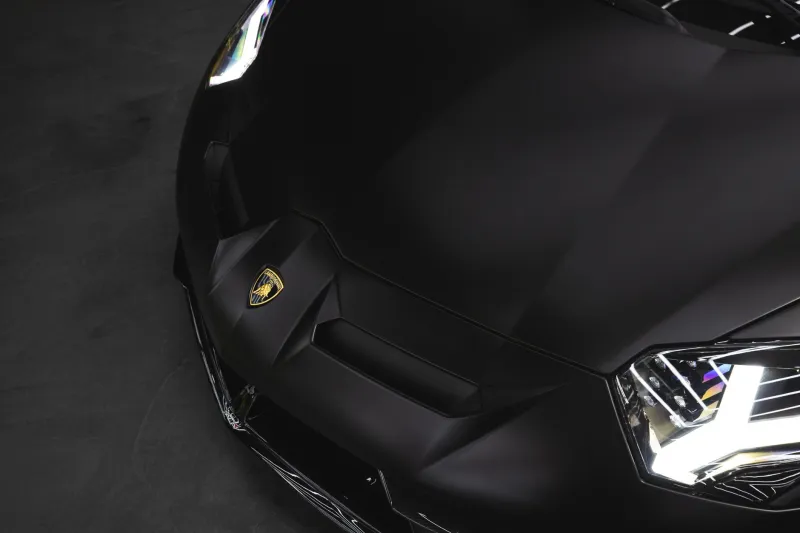
A Lamborghini in Giallo Orion is a statement. A Lamborghini in Verde Ithaca is a conversation. But a Lamborghini finished in one of the marque's genuinely rare, historically limited, or regionally exclusive factory colors? That is an entirely different category of object — one that occupies a specific and fiercely contested corner of the collector market.
Color, in the world of serious Lamborghini collecting, is not merely aesthetic. It is provenance. It is documentation. And increasingly, it is a primary driver of auction premiums that can separate two otherwise identical examples by six figures or more.
Why Color Matters Beyond Aesthetics
To understand the weight that factory paint carries in the collector community, one must first appreciate the way Lamborghini has historically approached its color palette. Unlike manufacturers who offer a fixed menu of standard finishes across model years, Lamborghini has long maintained an Ad Personam program allowing buyers to specify virtually any color imaginable — and has periodically released special-edition finishes tied to specific models, anniversary editions, or regional market introductions.
The result is a chromatic history of extraordinary complexity. Certain colors were produced in double-digit global quantities. Others were offered exclusively in specific markets — European deliveries, Japanese-market specials, Middle Eastern exclusives — and arrived in the United States only incidentally, carried by relocating owners or parallel importers. A handful of finishes were discontinued mid-production, applied to fewer than a dozen vehicles before disappearing entirely from the factory's records.
For collectors, these circumstances create scarcity. And scarcity, in the context of a brand already defined by limited production, translates directly into value.
The Most Sought-After Finishes
While individual tastes vary, certain colors have achieved near-mythological status within the American collector community.
Viola SE30, the deep purple developed for the 1993 thirtieth-anniversary Diablo, represents perhaps the archetype of the collectible Lamborghini color. Applied to a model already produced in limited numbers, this finish has become inseparable from the car's identity. Examples retaining their original, unrestored Viola SE30 paint command meaningful premiums at auction, with condition and documentation playing critical supporting roles.
Arancio Atlas, a rich, warm orange developed during the Murciélago era, achieved a following that its relatively modest production numbers would not initially suggest. Its saturation and complexity under different lighting conditions — shifting from a near-red in shade to a luminous amber in direct sun — made it a favorite among photographers and a subsequent favorite among collectors who understood its visual impact.
Blu Glauco, a deep metallic blue offered across several model generations, represents a different category: a color that reads as almost conservative by Lamborghini standards yet carries significant collector interest due to its relative rarity and the way it complements the aggressive bodywork of the Murciélago LP 670-4 SuperVeloce in particular.
More recently, finishes from the Centenario, Sián, and Essenza SCV12 programs — colors developed specifically for those ultra-limited models and never offered across the broader lineup — have entered a category of their own, their scarcity effectively guaranteed by the production numbers of the vehicles themselves.
The Authentication Challenge
Identifying a rare factory color is one matter. Proving that the paint on a given vehicle is original, unrestored, and genuinely as-delivered from the factory is another matter entirely — and the distinction carries enormous financial consequences.
The first line of authentication is documentary. Lamborghini's Certificato di Origine, the factory certificate of origin, records the original paint code applied to each vehicle. For American buyers, obtaining this documentation through the manufacturer or through established provenance research services is the foundational step. A certificate confirming a rare color code is necessary but not sufficient on its own.
Physical verification follows. Professional paint thickness gauges, applied systematically across body panels, can detect whether a vehicle has been refinished. Factory-applied paint exhibits specific thickness characteristics; a respray — even a high-quality one — typically shows measurable deviation. Experienced inspectors know where to look for the telltale signs: door jambs, the undersides of hoods and trunk lids, areas where masking irregularities might survive even a meticulous refinish.
Spectrophotometric analysis, once confined to insurance and forensic contexts, has entered the collector car world. These instruments measure the precise color profile of a paint surface, generating data that can be compared against factory color standards. While access to comprehensive Lamborghini factory color databases remains limited outside official channels, established specialists have built proprietary references over years of measuring authenticated examples.
What the Auction Record Reveals
The premium commanded by verified rare factory colors at major American auction houses has grown substantially over the past decade. Analysis of results from venues such as Mecum, Barrett-Jackson, and RM Sotheby's reveals a consistent pattern: well-documented examples in genuinely rare finishes consistently outperform comparable vehicles in standard colors, often by margins of fifteen to forty percent depending on the specific model and color combination.
The Viola SE30 Diablo examples referenced earlier have seen auction results that would be difficult to explain on mechanical grounds alone. Similarly, single-owner Murciélago examples in documented rare Ad Personam colors have attracted bidding activity from collectors who might otherwise have shown limited interest in the model.
The implication for buyers is clear. When evaluating a Lamborghini represented as wearing a rare factory finish, the investment in thorough authentication — documentation review, physical inspection, and spectrophotometric analysis — is not merely due diligence. It is financial self-preservation.
Preserving What the Factory Intended
For owners of Lamborghinis finished in genuinely rare colors, preservation carries responsibilities that extend beyond ordinary care. Cosmetic repairs, even those necessitated by minor damage, require specialists who understand the specific challenges of matching and blending unusual pigments. A poorly executed spot repair on a rare finish can compromise both the visual integrity and, ultimately, the auction value of the vehicle.
The collector community's relationship with rare Lamborghini paint is ultimately a relationship with history — with the specific moment in the marque's evolution when a particular color was conceived, approved, and applied to a finite number of machines. Treating that history with appropriate seriousness is, in the end, what separates a collector from a mere owner.