How America Became Lamborghini's Most Powerful Engine
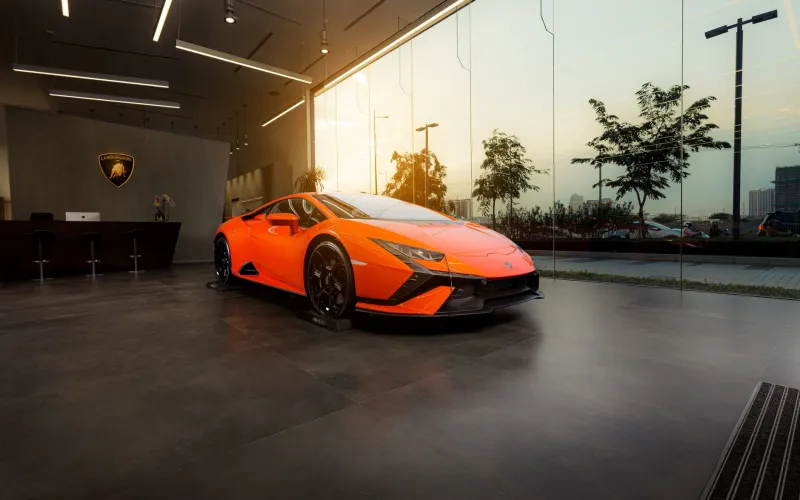
For much of Lamborghini's early history, the United States was treated as a promising but peripheral audience — a wealthy frontier market that could absorb a few hundred cars per year and generate enthusiastic press coverage. The brand's soul, its engineers, and its decision-makers were firmly rooted in Sant'Agata Bolognese, and the design briefs followed European sensibilities accordingly. That dynamic has changed with remarkable speed and consequence. Today, the US is not merely Lamborghini's largest single market; it is the market that shapes the marque's identity from the inside out.
The Numbers That Rewrote the Rulebook
Lamborghini delivered more than 3,000 vehicles to American customers in 2023 alone, representing roughly a third of global production. For a brand that prides itself on exclusivity, that figure is both extraordinary and instructive. When one geography accounts for that proportion of revenue, its preferences cease to be regional footnotes and become central to boardroom strategy. Dealers across the country — from Beverly Hills to Miami, from Dallas to New York — report waiting lists that stretch well beyond twelve months for flagship models, a phenomenon that has given American buyers an outsized voice in how the company positions itself.
The Urus SUV, which now constitutes the majority of Lamborghini's global sales volume, was not conceived primarily with European tastes in mind. American families, American road conditions, and American cultural appetites for versatility without sacrifice drove much of its development rationale. That the Urus became a global phenomenon speaks less to Lamborghini's European instincts and more to the company's willingness to follow where American demand was already pointing.
Design Language Shaped by Desert Highways and Coastal Boulevards
Speak with longtime brand historians and a consistent theme emerges: the visual drama of modern Lamborghinis has grown more pronounced as American influence has grown stronger. The sharp angles, the aggressive aerodynamic theater, the increasingly bold color palette — these are not incidental choices. They are calibrated responses to a market that consumes automotive spectacle with particular enthusiasm.
American collectors and first-time buyers alike tend to favor presence. A Lamborghini parked outside a Miami restaurant or navigating Rodeo Drive is expected to generate a reaction. European buyers, by contrast, have historically shown a preference for more restrained visual signatures — a tradition rooted in different cultural attitudes toward conspicuous wealth. Lamborghini's design studio has navigated this tension by doubling down on the theatrical, reasoning that its most passionate audience is also its most vocal.
Long-tenured dealers note that American customers also respond strongly to personalization. The Ad Personam customization program, which allows buyers to configure virtually every surface of a vehicle to individual specification, has found its most enthusiastic adoption in the US market. This appetite for bespoke expression has, in turn, encouraged the factory to invest more heavily in the program's capabilities — a feedback loop that benefits buyers globally but originated in American demand.
Shifting Production Priorities
The influence of American buyers extends beyond aesthetics into the more technical realm of production planning. Limited series and special editions — models like the Sián, the Invencible, and the Essenza SCV12 — are increasingly allocated with American collectors as a primary consideration. Allocation decisions that once followed European seniority and relationship hierarchies now account heavily for the purchasing history and long-term engagement of US-based clients.
This shift has not gone unnoticed among European collectors, some of whom express frustration at what they perceive as a dilution of the brand's continental identity. Their concern is understandable. Lamborghini was born in the Po Valley, shaped by Italian craftsmanship, and originally aimed at a clientele that could navigate the marque's idiosyncrasies with patience and mechanical sympathy. The American buyer, broadly speaking, expects a more polished and immediately gratifying experience — and Lamborghini has moved meaningfully in that direction.
Brand Positioning in the American Cultural Landscape
Perhaps the most significant transformation is one of cultural embedding. Lamborghini has become woven into American popular culture in a way that few European luxury brands have managed. Its presence in music, film, professional sports, and social media has created a brand awareness that extends far beyond traditional automotive enthusiast circles. This visibility is not accidental — it reflects a deliberate communications strategy that recognized American cultural exports as a form of global advertising.
The company's US marketing apparatus has leaned into this reality, partnering with athletes, artists, and cultural figures who carry the brand into spaces that automotive advertising alone could never reach. The result is a version of Lamborghini that feels simultaneously aspirational and accessible — a difficult balance to strike, and one that the brand manages with considerable skill.
What the European Soul Looks Like From Sant'Agata
For all the American influence, Lamborghini's leadership has been careful to preserve the elements that define the marque's Italian character. The cars are still built by hand in Emilia-Romagna. The design process still begins in Italy. The engineering philosophy — particularly the commitment to naturally-aspirated performance, at least for the moment — remains a point of pride that the factory is reluctant to surrender.
Brand historians are quick to point out that this tension between Italian identity and American appetite is not new. Ferruccio Lamborghini himself was a pragmatist who understood that commercial success required meeting the market where it stood. His successors appear to have absorbed that lesson thoroughly.
What is new is the scale of American influence and the directness with which it now shapes corporate decision-making. The US is no longer a market Lamborghini sells into. It is, in a very real sense, a market Lamborghini builds for — and the distinction carries profound implications for the marque's trajectory in the decades ahead.