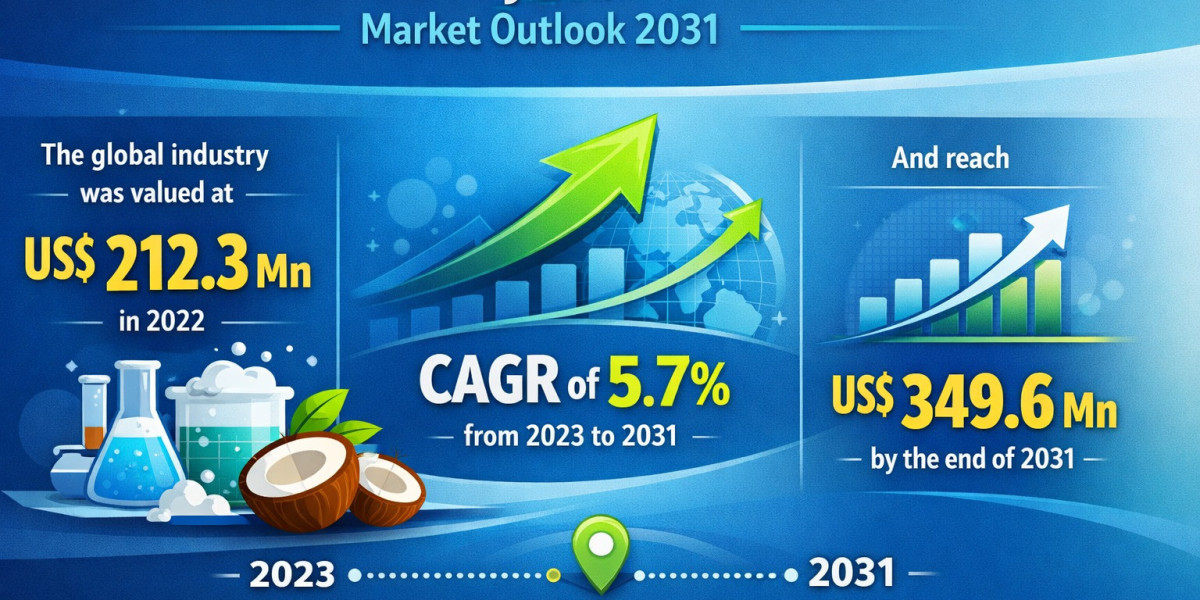

The global Sodium Cocoyl Isethionate (SCI) market is witnessing steady expansion, driven by the accelerating demand for mild, sulfate-free surfactants in personal care formulations. Valued at US$ 212.3 Mn in 2022, the industry is projected to grow at a compound annual growth rate (CAGR) of 5.7% from 2023 to 2031, reaching an estimated US$ 349.6 Mn by the end of 2031. This growth trajectory reflects structural shifts in consumer preferences toward gentler, eco-friendly, and skin-compatible ingredients across beauty and hygiene products.
Analyst Viewpoint
Rising pollution levels, increasing work-related stress, and ongoing climate variability are significantly contributing to the prevalence of skin disorders such as irritation, acne, dryness, and hair loss. These conditions are prompting consumers to seek skincare and haircare products that are both effective and gentle, thereby increasing demand for advanced surfactants such as sodium cocoyl isethionate. As SCI is derived from coconut oil and is known for its mild cleansing action, it is increasingly favored by manufacturers aiming to address sensitive skin concerns.
The rapid expansion of e-commerce platforms worldwide is further amplifying market growth by improving consumer access to premium beauty and personal care products. Online retail channels enable brands to promote sulfate-free, clean-label formulations to a wider audience, accelerating adoption across both developed and emerging economies.
Prominent market players are also investing heavily in the development of foamy, coconut-derived cleansing powders that meet the sustainability expectations of the eco-conscious beauty segment. The shift away from sulfate-based surfactants—known to cause irritation with prolonged use—toward sodium salt-based alternatives is a critical factor supporting the long-term outlook of the sodium cocoyl isethionate industry.
Market Introduction
Sodium cocoyl isethionate (SCI) is a mild anionic surfactant produced by reacting isethionic acid with fatty acids derived from coconut oil. Unlike traditional sulfate surfactants, SCI offers a gentle cleansing profile while producing a rich, creamy lather. This makes it particularly suitable for sensitive skin and scalp applications.
SCI is widely used in shampoos, body washes, facial cleansers, syndet bars, and soaps, where it works synergistically with emollients and humectants to protect the skin barrier. It effectively removes impurities without stripping natural oils, reducing the risk of dryness or irritation. While generally considered safe, SCI formulations are not recommended for individuals with coconut allergies.
Rise in Demand for Skin Care Products Boosting Market Growth
The global personal care industry is undergoing a transformation marked by rising demand for natural, organic, and sustainable ingredients. Consumers are increasingly scrutinizing product labels and favoring formulations that support skin health without long-term side effects. This trend is particularly pronounced in skincare and hygiene segments, where hydration and sensitivity protection have become key purchasing criteria.
According to Euromonitor International’s Voice of the Consumer: Beauty Survey 2022, consumers worldwide are seeking multifunctional beauty products that provide moisturization, sun protection, and suitability for sensitive skin. Hydration has emerged as a core functional benefit, strengthening the case for mild surfactants such as sodium cocoyl isethionate.
Major economies including the U.S., Japan, China, India, and South Korea represent significant consumption hubs for skincare products. Growing awareness of dermatological health, combined with increasing disposable incomes and urban lifestyles, is expected to sustain robust demand for SCI-based formulations over the forecast period.
Adoption of Sulfate-Free Surfactants Driving Market Statistics
Sodium cocoyl isethionate is gaining prominence as a biodegradable and skin-friendly alternative to petrochemical-derived sulfates. While sulfate-based surfactants are effective cleansing agents and are sometimes recommended for UV-protective formulations, prolonged use has been linked to skin, eye, and respiratory irritation.
The global shift toward sulfate-free beauty products is being driven by sustainability concerns and consumer demand for safer, gentler ingredients. Sulfate-free surfactants such as SCI help retain natural hair oils, improve moisture balance, and reduce irritation, while also aligning with environmentally responsible manufacturing practices.
As clean beauty trends continue to shape formulation strategies, sodium cocoyl isethionate is expected to remain a preferred surfactant choice for both mass-market and premium personal care brands.
Regional Outlook
From a regional perspective, North America accounted for the largest share of the global sodium cocoyl isethionate market in 2022. The region benefits from a mature cosmetics industry, high consumer awareness regarding skin and hair care, and strong demand for sulfate-free formulations. A 2020 survey by the Simmons National Consumer Survey indicated that over 307 million people in the U.S. use shampoo regularly, highlighting the scale of opportunity for SCI-based ingredients.
The Asia Pacific region represents a highly lucrative growth market, supported by rising disposable incomes, rapid urbanization, and increasing emphasis on personal hygiene. According to a 2022 Opensurvey study, more than 91% of women in South Korea reported using skin or toner products, while approximately 80% regularly used skincare creams. These consumption patterns are expected to drive strong demand for gentle surfactants across the region.
Analysis of Key Players
Leading manufacturers in the sodium cocoyl isethionate market are focusing on product innovation, capacity expansion, and strategic collaborations to strengthen their market positions. Investments in advanced SCI surfactant variants and specialty grades are enabling companies to cater to diverse application requirements.
Mergers and acquisitions remain a key growth strategy, allowing firms to expand their geographic footprint and enhance product portfolios. Key players operating in the global market include Innospec Inc., BASF SE, Clariant International Ltd., Galaxy Surfactants Ltd., AkzoNobel N.V., JEEN International Corporation, KIYU New Material Co., Ltd., Taiwan NJC Corporation, Henan Surface Chemical Industry Co Ltd, and Huanggang Yongan Pharmaceutical Co.,Ltd..
Market reports typically assess these companies based on product offerings, regional presence, financial performance, and strategic initiatives.
Key Developments
In May 2023, Heads & Shoulders launched a new shampoo formulated with only nine ingredients, including sodium cocoyl isethionate as the primary cleansing agent. The product is free from silicones, sulfates, and dyes, underscoring the growing commercial adoption of SCI in mainstream haircare brands.
Market Snapshot and Segmentation Overview
The sodium cocoyl isethionate market is segmented by type, including pellets/flakes, powders, and granules, and by application, covering hair care, skin care, oral care, and baby care. Haircare applications—particularly shampoos and conditioners—account for a substantial share of demand, followed by soaps, cleansers, and shower gels within the skincare segment.
Geographically, the market spans North America, Latin America, Europe, Asia Pacific, and the Middle East & Africa, with detailed country-level analysis across major economies such as the U.S., China, India, Japan, Germany, and Brazil.
Outlook Through 2031
With increasing emphasis on clean beauty, sustainability, and skin health, sodium cocoyl isethionate is positioned as a critical ingredient in next-generation personal care formulations. Continuous innovation, expanding e-commerce penetration, and rising awareness of sulfate-free alternatives are expected to sustain market momentum, enabling the industry to reach US$ 349.6 Mn by 2031 at a steady 5.7% CAGR.