Gearbox Under Pressure: The Transmission Crisis Quietly Threatening Lamborghini Owners Across America
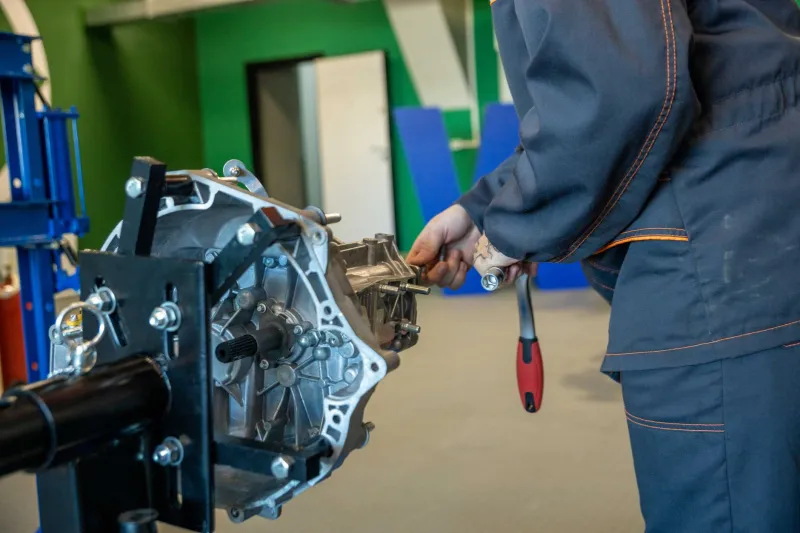
There is a particular kind of silence that no Lamborghini owner ever wants to experience. Not the refined hush of a cabin at idle, nor the contemplative quiet of a garage at midnight. This silence arrives without warning, somewhere between second and third gear, followed by a dashboard that illuminates like a Christmas tree and a repair estimate that arrives days later in five figures. Across the United States, that silence is becoming disturbingly familiar.
A pattern has emerged among American Lamborghini owners that is drawing attention from independent mechanics, specialist workshops, and online communities with equal urgency. Transmissions—specifically the single-clutch e-gear systems found in earlier-generation Gallardos and the dual-clutch units employed in select Huracán and Aventador configurations—are failing at rates that owners describe as premature, and at costs that even seasoned collectors find difficult to absorb.
The Scope of the Problem
To characterize this as an isolated mechanical inconvenience would be a disservice to the owners living through it. Multiple independent Lamborghini specialists operating across California, Florida, Texas, and the Northeast have reported a measurable uptick in transmission-related service inquiries over the past several years. The complaints are remarkably consistent: hesitation during upshifts, abrupt downshift behavior, loss of engagement at low speeds, and in the most severe cases, complete gearbox failure requiring full replacement.
The models most frequently cited include the Gallardo equipped with the e-gear automated manual transmission, the Aventador's ISR single-clutch unit, and to a lesser but still notable degree, the Huracán's dual-clutch LDF gearbox. Each system operates on fundamentally different principles, yet owners across all three platforms are arriving at the same destination: an unexpected and expensive repair.
One owner based in the Dallas area, who purchased a low-mileage Aventador S through a certified pre-owned program, described the experience in direct terms. His vehicle exhibited intermittent hesitation during spirited acceleration for several months before a catastrophic failure rendered it undriveable. The repair bill exceeded forty thousand dollars. The vehicle had fewer than eighteen thousand miles on the odometer.
American Conditions: An Inconvenient Variable
Lamborghini's engineering teams develop and validate their vehicles under European driving conditions, with testing protocols calibrated to the roads, temperatures, and usage patterns common to that environment. The United States presents a meaningfully different set of variables, and several independent technicians believe those differences are contributing to accelerated wear.
American stop-and-go traffic, particularly in cities like Los Angeles, Miami, and Houston, places sustained thermal stress on transmission components that were not necessarily designed with extended urban crawl in mind. The e-gear and ISR systems, which rely on precise clutch engagement algorithms, are especially sensitive to the repetitive partial-engagement cycles that characterize gridlock driving. Over time, this thermal cycling degrades clutch pack materials and strains the hydraulic actuators responsible for smooth gear changes.
Furthermore, the United States sees a broader range of ambient temperatures than most European test environments. A Lamborghini driven in Phoenix in July and stored in an unheated Minnesota garage through February is experiencing thermal extremes that can affect fluid viscosity, seal integrity, and electronic calibration in ways that compound over time.
Michael Torres, an independent Lamborghini specialist operating a dedicated workshop in Southern California, has serviced over two hundred examples of the marque across his career. He is measured but candid in his assessment. "These are not poorly engineered transmissions," he states. "But they are transmissions engineered for a specific operating profile. When the real-world usage diverges significantly from that profile—and in America, it often does—you accelerate the wear curve in ways the warranty period was never designed to capture."
The Dealer Service Gap
Beyond driving conditions, a secondary concern has surfaced among the ownership community: inconsistent service quality at the authorized dealer level. Lamborghini's American dealer network, while expanded in recent years, remains geographically concentrated. Owners in major metropolitan areas may have reasonable access to factory-trained technicians and proprietary diagnostic equipment. Those outside those corridors frequently do not.
Transmission health in these vehicles is not a static condition. It requires periodic fluid analysis, software recalibration, and in the case of the e-gear system, clutch wear assessment at defined intervals. When those service touchpoints are missed—whether due to geographic inconvenience, scheduling friction, or simple owner unawareness—the degradation compounds quietly until it becomes impossible to ignore.
Several owners consulted for this piece were unaware that their transmissions required any service beyond standard oil changes. This represents a communication failure that exists somewhere in the chain between the manufacturer, the dealer, and the customer—and it carries real consequences.
What Independent Analysis Reveals
When failed units are disassembled and examined by independent specialists, certain failure signatures appear with regularity. In e-gear systems, worn clutch packs combined with degraded hydraulic fluid are the most common findings—conditions that suggest deferred maintenance rather than catastrophic design failure. In ISR-equipped Aventadors, actuator wear and software calibration drift appear frequently, pointing toward the need for more proactive electronic servicing than many owners receive.
The dual-clutch LDF unit found in the Huracán presents a somewhat different picture. Failures in this system tend to involve the mechatronic unit—the integrated electronic and hydraulic control assembly—and often manifest after vehicles have been subjected to repeated high-performance driving without adequate cool-down periods. Track use without proper transmission cooling provisions appears to be a contributing factor in a meaningful subset of cases.
None of these failure modes suggest that the vehicles are fundamentally flawed. What they do suggest is that ownership of a vehicle at this performance level requires a maintenance philosophy that is more rigorous, more proactive, and more informed than many buyers anticipate at the point of purchase.
Protecting Your Investment
For current owners, the path forward is neither simple nor inexpensive, but it is navigable. Specialists across the country recommend several concrete measures.
First, establish a relationship with a qualified independent technician who possesses factory-level diagnostic capability for your specific model. The Lamborghini LDAS diagnostic system is essential for accurate transmission health assessment, and not every independent shop has access to it. Find one that does.
Second, adhere strictly to transmission fluid change intervals—and in high-stress operating environments, consider shortening those intervals proactively. Fluid analysis can provide early warning of internal wear before it progresses to component failure.
Third, if your vehicle is equipped with an e-gear or ISR transmission, have the clutch wear position checked at every major service. These systems provide measurable clutch engagement data that, when trended over time, can predict impending failure with reasonable accuracy.
Finally, if track driving is part of your ownership experience, invest in aftermarket transmission cooling solutions appropriate for your model. The factory thermal management systems were not universally designed with sustained high-performance use in mind.
A Broader Conversation
The transmission concerns circulating through the American Lamborghini community are not, at their core, a story about defective machinery. They are a story about the intersection of extraordinary performance engineering and the realities of ownership in a vast, climatically diverse, and infrastructure-variable market.
Lamborghinis are instruments of remarkable capability. They demand, in return, an equally remarkable commitment to their care. The owners who understand this—who approach maintenance with the same seriousness they bring to driving—are the ones who avoid the silence. The ones who do not are learning its cost the hard way.