The Disappearing Bulls: Why America's Wealthiest Lamborghini Collectors Are Going Dark Online
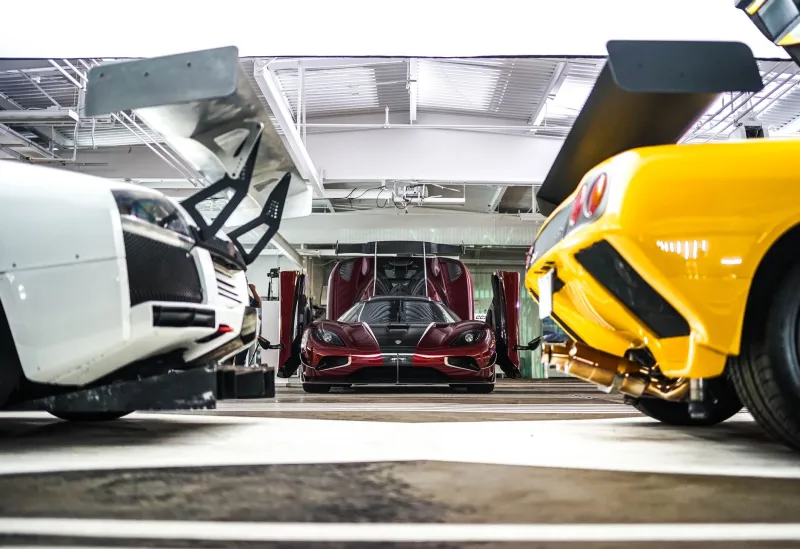
For much of the past decade, the American supercar landscape was inseparable from the digital one. Instagram feeds bloomed with V10 exhausts catching golden-hour light. YouTube channels catalogued every detail of freshly delivered Huracáns. The driveway reveal — filmed, edited, and uploaded within hours of delivery — became its own cultural ritual. Lamborghini, with its theatrical design language and operatic engine notes, was arguably the most photogenic beneficiary of this era.
That era appears to be ending. Not with a dramatic announcement, but with a quiet, deliberate withdrawal.
Across the country's most concentrated pockets of supercar wealth — from the gated communities of South Florida to the canyon roads above Malibu — a meaningful segment of Lamborghini owners has begun treating digital invisibility not as a missed opportunity, but as a conscious strategic choice. The rarest thing a Lamborghini can be in 2025, it seems, is unseen.
The Surveillance Problem Nobody Is Talking About
The mechanics behind this shift are less romantic than they might appear. Sophisticated theft networks operating across major American metropolitan areas have become remarkably adept at using social media as an intelligence-gathering tool. A geo-tagged photograph of an Urus parked outside a Miami restaurant, a story featuring a Revuelto in a recognizable Beverly Hills driveway, a tagged check-in at a Scottsdale car meet — each data point, individually innocuous, contributes to a profile that organized criminal enterprises have proven willing to act upon.
Law enforcement agencies in California, Texas, and Florida — states that collectively account for a disproportionate share of Lamborghini registrations — have documented a correlation between high-profile social media activity and targeted vehicle theft. The methodology has grown sophisticated enough that some investigators describe criminal groups maintaining dedicated personnel whose sole function is monitoring the accounts of known supercar owners.
For owners who have invested anywhere from $250,000 to well over a million dollars in a single vehicle, the calculus is straightforward. Visibility is liability.
When the Insurer Becomes the Audience
Theft is not the only institutional concern driving this behavioral change. Insurance carriers specializing in high-value automotive coverage have grown considerably more attentive to the digital footprints of their policyholders. Underwriters at several specialty firms have quietly acknowledged that social media content is now considered part of the broader risk assessment picture — not merely during initial policy issuance, but on an ongoing basis.
An owner who publicly documents aggressive track use, spirited canyon driving, or modifications that deviate from factory specification may find that documentation surfacing at precisely the wrong moment: during a claims review. The language of most high-value automotive policies creates sufficient ambiguity that insurers retain meaningful latitude in how they interpret documented behavior. Owners who have navigated contentious claims processes describe the experience of having their own social media content introduced as evidence against them as both surprising and instructive.
The lesson, once learned, tends to produce lasting behavioral changes.
The Redefinition of Status
Beyond the practical calculus of theft and insurance risk, something more culturally significant appears to be occurring. The demographic profile of the most committed American Lamborghini collectors — individuals whose collections frequently include multiple seven-figure vehicles and whose relationship with the marque extends across decades — has never been particularly aligned with the performative impulses of social media culture.
For this cohort, the conspicuous documentation of wealth has long carried an air of vulgarity. The truly serious collector, in this worldview, has little need for external validation. The car exists for the owner's enjoyment, not for an audience's approval.
What has changed is that this perspective, once held quietly by a minority, has begun migrating into broader ownership culture. Younger buyers who might once have embraced the visibility of supercar ownership are increasingly absorbing the ethos of their more experienced counterparts. The flex, it turns out, has a shelf life.
There is also a generational dimension to this shift that deserves acknowledgment. The cohort of ultra-high-net-worth Americans who came of age before the smartphone era maintains a fundamentally different relationship with privacy. For these individuals, discretion was never a calculated strategy — it was simply the default mode of serious wealth. Their influence on supercar ownership culture, as they acquire increasingly significant collections, is pulling the broader community toward a quieter posture.
The Paradox of Presence
The irony embedded in this trend is considerable. Lamborghini, as a manufacturer, has never been more digitally engaged. The brand's own social channels produce sophisticated content at a relentless pace. The vehicles themselves are designed with a visual assertiveness that makes anonymity seem almost structurally impossible — one does not exactly blend into traffic in a Revuelto finished in Verde Scandal.
Yet the owners of these machines are increasingly declining to amplify that presence. The car announces itself in the physical world; the owner ensures it disappears from the digital one.
This creates a peculiar dynamic within the broader enthusiast community. The content that does circulate — the well-composed photographs, the carefully produced videos — tends increasingly to originate from professional media outlets, authorized brand channels, or the relatively small subset of owners who have made content creation central to their identity. The organic, owner-generated documentation that once gave social media its texture of authenticity is becoming scarcer.
What Remains
None of this suggests that the American appetite for Lamborghini ownership is diminishing. Allocation waitlists remain formidable. Residual values for the most desirable configurations continue to reflect extraordinary demand. The marque's cultural authority in the American supercar conversation is, if anything, more firmly established than it has ever been.
What is changing is the theater around ownership. The performance of acquisition — the unboxing, the reveal, the first-drive documentation — is giving way to something quieter and, in its own way, more assured. The most serious collectors have always understood that the relationship between an owner and a Lamborghini is fundamentally private. The noise belongs to the engine, not the algorithm.
In retreating from digital visibility, America's most committed Lamborghini owners may be articulating something the brand itself has always known: that genuine passion requires no audience. The bull has never needed permission to charge.