By Design, Not Accident: The Strategic Scarcity That Makes Lamborghini Ownership an American Obsession
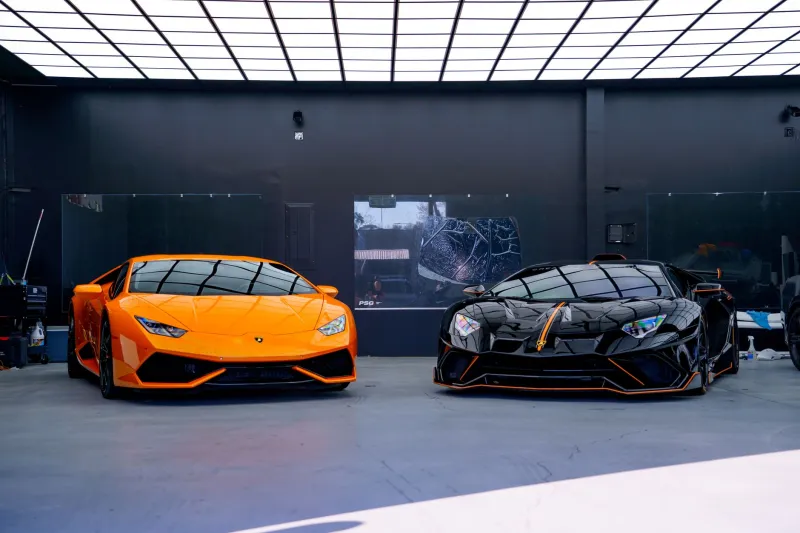
In the economics of desire, nothing accelerates want quite like unavailability. Lamborghini has understood this principle intuitively for decades, and in no market has the application of that understanding been more calculated — or more consequential — than in the United States. The allocation of Lamborghinis to American buyers is not a logistics exercise. It is a carefully maintained performance, and the audience is precisely the class of buyer for whom scarcity is not a frustration but a feature.
The result is an ecosystem in which the car itself is almost secondary to the social and psychological architecture that surrounds it — an architecture that Lamborghini has built, brick by brick, through deliberate production restraint.
The Architecture of Limitation
Lamborghini's global production capacity is, by the standards of the automotive industry, remarkably constrained. The Sant'Agata facility produces approximately 10,000 vehicles per year across all model lines — a figure that a manufacturer like Porsche can match in a matter of weeks. This is not a manufacturing limitation in the traditional sense; it is a strategic posture. Lamborghini's parent company, Volkswagen Group, has the capital and industrial infrastructure to scale production significantly if commercial logic demanded it. The choice not to do so is a choice.
Within that constrained global output, U.S. allocations are managed with particular precision. Dealers in major American markets — Beverly Hills, Manhattan, Miami, Dallas, Chicago — receive annual allocations that are negotiated with the factory and tied to historical sales performance, customer relationship depth, and the dealer's demonstrated ability to place vehicles with qualified buyers rather than flippers. A high-volume dealer in a primary market might receive twelve to eighteen units of a given model annually. A smaller market dealer may receive four or five.
For limited editions and special series — the Performante variants, the STO, the Essenza SCV12 — the allocation process becomes even more selective. These vehicles are effectively pre-allocated to relationship buyers, meaning that by the time a model is publicly announced, every U.S. unit is already spoken for by individuals whose histories with the brand and their respective dealers have earned them priority access.
The Psychology of the Waiting List
The waiting list is Lamborghini's most powerful marketing instrument, and it costs the company nothing to deploy. When a new model is announced — the Revuelto's reveal generated immediate allocation inquiries from existing owners before the car's final specifications were even confirmed — dealers begin fielding expressions of interest that quickly exceed available supply. This dynamic is not accidental; it is cultivated.
For the class of American buyer who can write a check for a Lamborghini without meaningful financial disruption, the waiting list performs a function that the car itself cannot: it imposes a barrier. In a world where sufficient wealth can acquire almost anything immediately, the requirement to wait — to demonstrate relationship, loyalty, and patience — introduces a social dimension that elevates ownership from a transaction to a credential.
Several current owners, speaking candidly about the dynamics at their respective dealerships, described the allocation process in terms that had less to do with the car and more to do with belonging. One Los Angeles-based collector, who has purchased four Lamborghinis over twelve years, observed that the first allocation he received — a 2014 Huracán delivered before the model was widely available — did more for his standing within a particular social circle than the car's performance ever could have. "It told people something about my relationship with the dealer," he noted, "and that relationship implied other things."
Scarcity as a Resale Mechanism
The financial consequences of controlled scarcity extend well beyond the social. Lamborghinis, particularly limited-edition variants, have demonstrated a consistent pattern of appreciation or minimal depreciation in the American market — a behavior that sets them apart from virtually every other category of depreciating asset and that is directly attributable to production restraint.
The Aventador SVJ, produced in a global run of 900 units, commanded significant premiums over MSRP in the secondary market within months of delivery. The Huracán STO, despite a more modest production run than its predecessors, sustained above-sticker transaction prices in the American market for more than eighteen months after its introduction. These are not market accidents. They are the predictable outcomes of a supply architecture engineered to ensure that demand perpetually exceeds availability.
For American collectors who view their Lamborghinis as components of a broader asset portfolio — a perspective increasingly common among ultra-high-net-worth buyers in their thirties and forties — this dynamic is not merely pleasant; it is a purchase justification. The car becomes simultaneously an object of desire and a store of value, and Lamborghini's production discipline is the mechanism that makes both dimensions credible.
The Tension at the Center
The strategic logic of scarcity, however, contains a structural tension that Lamborghini cannot indefinitely ignore. The U.S. market's appetite for Lamborghinis is not static — it has grown substantially over the past decade, and a new generation of wealthy Americans, many of them technology and finance sector earners in their thirties, represents an expanding universe of potential buyers. Every unit that Lamborghini declines to produce in service of exclusivity is a sale that does not occur, a relationship that does not begin, and revenue that does not materialize.
The Urus represents Lamborghini's most visible concession to growth pressure — a vehicle that effectively doubled the brand's production volume and broadened its demographic reach significantly. Its commercial success has been unambiguous, but it has not come without cost to the brand's mystique. Lamborghini Urus sightings in American cities are now common enough to have lost the frisson of rarity that once accompanied any encounter with a Sant'Agata product.
The question the company faces — and has not yet definitively answered — is whether the Urus's volume can be quarantined from the brand's supercar identity, or whether the law of familiarity will gradually erode the exclusivity premium that makes the Revuelto and its successors so commercially potent.
What Scarcity Costs the Buyer
For the American buyer navigating this system, the practical implications of deliberate scarcity are tangible. Markups on high-demand models, while not universally applied by authorized dealers, remain a feature of the market for the most sought-after allocations. The social calculus of cultivating a dealer relationship — attending events, purchasing accessories, maintaining a visible presence in the brand's ecosystem — represents a real investment of time and social capital.
And yet, for the buyers who engage with this system on its own terms, the returns — financial, social, and experiential — are substantial. Lamborghini has built something that transcends the conventional automobile market: a closed economy in which the currency is relationship, the commodity is access, and the product is, almost incidentally, one of the most extraordinary driving machines on earth.
The scarcity is by design. So is the obsession.