Beyond the Redline: Inside America's Most Secretive Lamborghini Performance Workshops
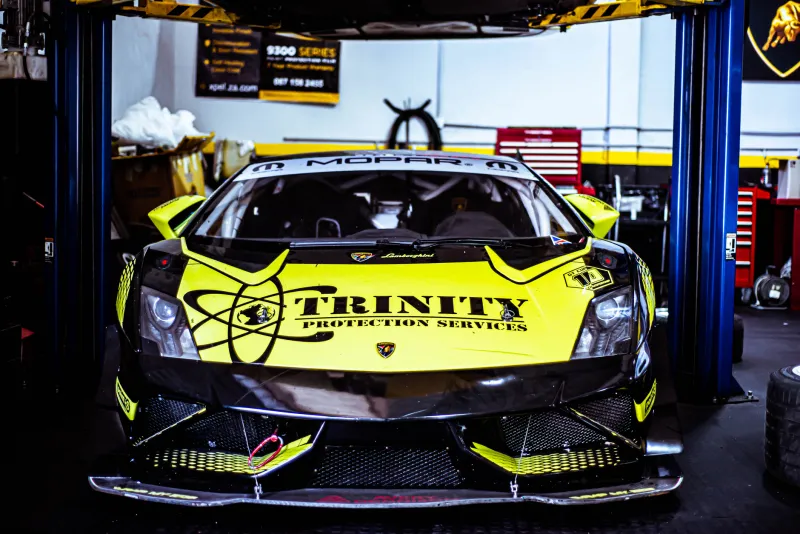
The Lamborghini factory does not consider its work finished when a vehicle leaves Sant'Agata Bolognese. It considers it finished when the car reaches its owner. For most buyers, that is an entirely reasonable arrangement — the performance envelope of a stock Huracán or Urus is, by any rational measure, more than sufficient for public road use. But for a particular subset of American enthusiasts, the factory specification is merely a starting point, and a modest one at that.
This is the world of high-end Lamborghini tuning: a subculture defined by extraordinary technical ambition, significant legal exposure, and a code of discretion that makes its participants difficult to reach and even more difficult to quote by name.
The Workshops That Don't Advertise
The most capable Lamborghini tuning operations in the United States share a counterintuitive characteristic — they do not need to market themselves. Located primarily in Southern California, South Florida, and the greater Dallas-Fort Worth corridor, these shops build their client rosters almost exclusively through personal referral. A conversation at a private track day, a word passed through a concierge service at a luxury hotel, an introduction made at a Barrett-Jackson auction — these are the channels through which serious tuning relationships are formed.
The discretion is not affectation. It is legal necessity. A meaningful portion of the modifications these shops perform — particularly those involving engine management recalibration, catalytic converter removal, and exhaust system replacement — conflict with the Environmental Protection Agency's Clean Air Act provisions and, in California, with the California Air Resources Board's considerably stricter standards. Shops that operate publicly and advertise such services invite regulatory scrutiny they cannot afford.
One tuner, speaking on condition of anonymity, described the business model with characteristic understatement: "We work on cars for people who understand what they're asking for. We don't have a website. We don't need one."
What the Numbers Actually Look Like
The performance gains achievable through serious Lamborghini tuning are not marginal. A naturally aspirated Huracán EVO, which leaves the factory producing approximately 630 horsepower, can be developed to outputs approaching 750 horsepower through a combination of high-flow intake systems, full exhaust replacement, and aggressive engine management recalibration — without forced induction. With the addition of a twin-turbocharger system, figures north of 1,000 horsepower are achievable, though the engineering complexity and thermal management challenges increase substantially.
The Urus, with its twin-turbocharged V8, is in some respects a more tractable platform for power modification. Several American tuning operations have demonstrated sustained outputs exceeding 900 horsepower from the Urus's 4.0-liter engine, and at least two have documented quarter-mile times that would embarrass purpose-built drag cars costing considerably more.
The Aventador's naturally aspirated V12 presents a different philosophical challenge. The engine's character is so intimately tied to its mechanical specification that many serious tuners approach it with relative restraint, focusing instead on suspension geometry, aerodynamic development, and weight reduction rather than outright power addition.
The Warranty Calculation
Every owner who engages with a performance tuning shop faces the same fundamental trade-off: enhanced capability against the complete forfeiture of manufacturer warranty coverage. Lamborghini's warranty terms are explicit — modifications that alter powertrain specifications void coverage for affected systems, and the manufacturer retains considerable latitude in determining what constitutes an "affected system" when a warranty claim is submitted.
The Magnuson-Moss Warranty Act, a federal statute that governs written warranties on consumer products, does provide some protection against blanket warranty voiding. Under its provisions, a manufacturer cannot void an entire warranty simply because an owner has installed aftermarket components; it must demonstrate that the specific modification caused the specific failure being claimed. In practice, however, proving causation in a complex powertrain dispute is technically demanding, and few owners have the appetite to litigate the question against a manufacturer's legal team.
Tuners who work with experienced Lamborghini owners typically frame the conversation honestly: once significant modifications are made, the vehicle should be regarded as operating outside the manufacturer's support structure. Owners who accept that framing and plan accordingly — maintaining relationships with independent specialists, carrying appropriate insurance, and budgeting for out-of-pocket mechanical expenses — tend to navigate the tuned ownership experience more successfully than those who proceed with unrealistic expectations.
Insurance: The Conversation Most Owners Avoid
The insurance implications of performance modification are, if anything, more consequential than the warranty considerations. Standard exotic vehicle insurance policies — including those offered by specialty carriers such as Hagerty and Chubb — contain provisions that can limit or deny coverage for vehicles modified beyond factory specification, particularly when a claim arises from circumstances plausibly related to those modifications.
Owners who have invested $80,000 or more in tuning work and fail to disclose those modifications to their insurer face the possibility of a claim denial at precisely the moment they can least afford one. Specialty brokers who focus on modified exotic vehicles do exist, and obtaining appropriate coverage before modifications are undertaken — rather than after — is the only prudent approach.
The Allure Is Real
None of this is to suggest that the tuning world lacks legitimate appeal. The machines that emerge from the best American performance workshops are genuinely extraordinary — vehicles that combine Lamborghini's foundational drama with performance capabilities that no production car, at any price, can match. For the owner who understands the risks, accepts them with open eyes, and has the financial capacity to absorb the consequences, the experience of driving a properly developed Lamborghini on a closed course is described by those who have done it in terms that strain ordinary language.
The underground tuning scene is not for everyone. But for those it is for, it represents something the factory, by definition, cannot offer: a vehicle built to a single owner's exact specification, with no concession to regulatory compliance, commercial viability, or the preferences of anyone other than the person who will drive it.